
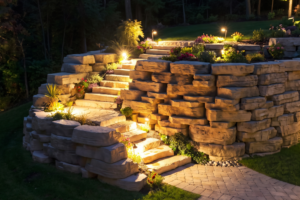
 Low voltage landscape lighting systems deliver professional-grade illumination for less than $5 per month with a typical 10-light LED setup. This energy efficiency makes them a popular choice for homeowners who want to improve their outdoor spaces without inflating electricity bills. These systems are a great way to get practical installation advantages. We’ve seen how low voltage lighting reshapes the scene in gardens and pathways by adding depth and character to outdoor features. This piece explores how low voltage landscape lighting works and compares the best low voltage outdoor lights available. We’ll share low voltage landscape lighting ideas that combine energy efficiency with stunning visual appeal.
How Does Low Voltage Landscape Lighting Work
Understanding the 120V to 12V Conversion
A transformer serves as the heart of any low voltage lighting setup. It converts standard household electricity into a safer level suitable for outdoor use. The transformer contains a primary coil that connects to your home’s 120V power source and generates a magnetic field through electromagnetic induction. This magnetic field transfers to a secondary coil with fewer wire turns. The voltage output follows a ratio: a secondary coil with one-tenth as many turns as the primary delivers one-tenth the voltage and produces 12 volts from a 120-volt supply.
This conversion process makes outdoor lighting installations safer and more available. The National Electrical Code limits secondary voltage for low-voltage lighting systems to a maximum of 30 volts AC. Most residential systems operate between 12 and 15 volts. Line voltage systems require burial depths of 18 inches. Low voltage cable only needs burial at a minimum depth of 6 inches.
Components That Make Up the System
Low voltage landscape lighting systems rely on five core components working together. The transformer determines how many lights your system can support based on its wattage rating. We recommend choosing a transformer with at least 20 percent spare capacity beyond your total connected wattage. Homeowners usually leave headroom rather than matching total wattage exactly.
Cable thickness affects voltage performance over distance. Gage measures this thickness. Longer runs or higher total wattage require thicker cable to maintain even brightness. Many uneven lighting issues trace back to cable that is too thin for the layout. Fixtures distribute light based on their type. Path lights, spotlights, well lights and step lights each serve different functions. Connectors link fixtures to the main cable line. Poor connections are a common source of system failure due to weather exposure. Controls manage when the system operates and range from photocells to app-based timers.
Why 12 Volts Is the Industry Standard
The change toward 12-volt systems reflects safety priorities and design flexibility. Exposure to 120V can be fatal. Exposure to 12V produces only a slight shock. This voltage level allows fixtures to be positioned near plants and walkways without overheating risks. Modern LED technology has eliminated historical concerns about voltage drop on long runs and makes low voltage systems viable for most residential applications.
Energy Efficiency Benefits of Low Voltage LED Lighting Systems
75% Less Energy Consumption Compared to Traditional Lighting
LED lighting uses at least 75% less energy than incandescent lighting, according to the U.S. Department of Energy. Low voltage LED systems push efficiency even further and consume up to 80% less electricity than traditional halogen or incandescent bulbs. This difference stems from how LEDs generate light. Traditional halogen bulbs lose up to 90% of their energy as heat. LED lights waste only about 5-10%. A 10-watt LED bulb produces the same illumination as a 60-watt incandescent bulb. You can run six LED fixtures for the energy cost of one older bulb.
Lower Monthly Electricity Bills with LED Technology
The energy efficiency translates into measurable savings. Running 20 eight-watt LEDs for 5 hours per day consumes under 24 kilowatt-hours monthly and costs under $5 per month. Halogen or incandescent bulbs are no match for this efficiency and run for $20 to $25 monthly under the same conditions. To cite an instance, see a single 6-watt LED landscape light operating 8 hours nightly. It costs approximately $2 per year. The same runtime with a 50-watt halogen bulb would cost about $24 per year.
Reduced Carbon Footprint for Eco-Conscious Homeowners
Energy savings compound into environmental benefits. Every kilowatt-hour saved reduces greenhouse gas emissions. Using 10 low voltage lights instead of high-voltage alternatives can reduce carbon dioxide emissions by several hundred pounds per year. Widespread LED adoption could save the equivalent annual electrical output of 44 large electric power plants by 2027, the U.S. Department of Energy estimates.
Long-Term Cost Savings from 25,000+ Hour Lifespan
Quality LED landscape lighting fixtures carry ratings between 25,000 to 50,000 hours. That translates to roughly 11 to 23 years before brightness loss at 6 hours of nightly use. Fewer replacements and lower energy bills compound into substantial savings over a decade.
Safety and Installation Advantages of Low Voltage Lighting Systems
Minimal Risk of Electrical Shock During Installation
Working with 12-volt systems eliminates the dangers that come with standard household current. Low voltage landscape lighting systems carry very little risk of electrical shock, even with fixtures installed underwater. 120V line voltage systems pose serious safety hazards. 12V lighting produces only a slight shock upon direct contact. Pets, children, and anyone who digs up buried wires by accident face no electrocution risk with low voltage systems installed the right way. This safety margin allows us to position fixtures near water features and swimming pools without concern.
Weather-Resistant and Durable in Outdoor Conditions
Quality fixtures built with brass or aluminum withstand harsh weather conditions. These durable materials resist corrosion and maintain performance through rain, snow, and temperature extremes. Zinc/aluminum alloy housings with stainless steel hardware ensure outdoor performance that lasts.
Flexibility to Expand or Modify Your System Anytime
Modular components allow us to expand or adjust systems as landscapes evolve. We can add fixtures, adjust placements, or redesign lighting layouts without rewiring existing installations. The system adapts without expensive reinstallation costs when plantings mature or hardscaping updates occur.
Best Low Voltage Outdoor Lights and Smart Features
Smart Transformers with Timers and Photocells
Modern transformers have mechanical timer pins that control outdoor lighting activation and deactivation. The photocell alone enables automatic dusk-to-dawn operation, or you can combine both features for precise scheduling. Astronomic digital timers adjust for seasonal daylight changes and handle Daylight Savings Time transitions. Wi-Fi enabled transformers respond to Alexa or Google Home voice commands.
App-Controlled RGB and Color-Changing Options
RGBW landscape lights offer four color channels: red, green, blue and white. Smartphones manage these lights over 2.4GHz Wi-Fi networks through app control, with voice commands via Alexa or Google Assistant. The technology has 12 preset scene modes and music sync capabilities that pulse lights to audio rhythms. RGBW systems consume less energy than traditional RGB configurations because individual channels operate independently at higher brightness levels.
Solar-Hybrid Low Voltage Systems
Solar-hybrid systems combine solar panels with grid power backup. Intelligent voltage sensors detect low battery levels and switch from solar to grid electricity. These units deliver 8 to 14 hours of nightly illumination with up to 3 days of battery reserve. The systems eliminate monthly utility bills and maintain reliable performance during cloudy or rainy conditions.
Motion Sensors for Added Security and Energy Savings
Motion-activated lights reduce energy usage by 30% to 50% compared to always-on systems. PIR (Passive Infrared) technology detects heat from people or animals within a 270-degree detection range. Inline motion sensors activate all downstream fixtures once movement occurs, with customizable timer settings of 5, 10 or 15 minutes.
Low voltage landscape lighting offers energy efficiency and safety at an affordable price. Monthly costs stay under $5. Installation is simple enough for any homeowner. Smart features in 2026 make these systems more flexible than ever before. Choose a quality transformer with adequate wattage capacity and select LED fixtures that match your design vision. You can start enjoying outdoor lighting that pays for itself through energy savings.
FAQs
Q1. How much does it cost to run low voltage landscape lighting each month? A typical 10-light LED low voltage system costs less than $5 per month to operate. Running 20 eight-watt LED fixtures for 5 hours daily consumes under 24 kilowatt-hours monthly, resulting in minimal electricity expenses compared to traditional lighting options.
Q2. How long do LED low voltage landscape lights typically last? Quality LED landscape lighting fixtures are rated between 25,000 to 50,000 hours of operation. With average nightly use of 6 hours, this translates to approximately 11 to 23 years before experiencing significant brightness loss, making them extremely durable and cost-effective.
Q3. Are low voltage landscape lights safe around children and pets? Low voltage systems operating at 12 volts are very safe and pose minimal risk of electrical shock. Unlike 120V systems that can be dangerous, 12V lighting produces only a slight shock upon direct contact, making them safe to install near water features, pools, and high-traffic areas.
Q4. What smart features are available for low voltage landscape lightin? Modern systems offer smart transformers with timers and photocells, app-controlled RGB color-changing options via Wi-Fi, solar-hybrid capabilities with grid backup, and motion sensors for security. Many systems integrate with Alexa or Google Home for voice control and automated scheduling.
We Provide Outdoor Lighting Design Services
When you partner with our lighting design team, you’re not just getting fixtures installed—you’re investing in a custom lighting narrative that transforms your property into a stunning nighttime showcase. Our designers work closely with you to understand your vision, then craft a lighting plan that highlights your home’s best architectural features while creating the perfect ambiance for your outdoor living spaces. You’ll see how strategic placement of uplighting, moonlighting, and accent fixtures can turn ordinary landscaping into an extraordinary visual experience that makes your neighbors stop and stare.
> Learn More
Contact Us (513-485-1912) for a Free Consultation!
—
 About Elegant Outdoor Lighting & Design
 About Elegant Outdoor Lighting & Design
Elegant Outdoor Lighting & Design provides custom landscape and architectural lighting for homeowners who want to enjoy their property after dark. We design and install outdoor lighting systems that enhance the architecture of your home, while illuminating trees, pathways, patios, pools and outdoor living spaces. Our approach focuses on balance, warmth, and thoughtful fixture placement to create inviting nighttime environments. From personalized design consultations to professional installation and ongoing maintenance, we deliver outdoor lighting solutions tailored to fit your home and your vision.
> Learn More