
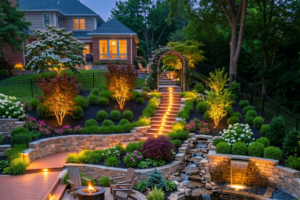
 Navigating a sloped yard can be a daunting task, especially after the sun sets. Uneven surfaces, hidden steps, and dark corners can turn a simple walk into a hazardous journey. However, with the right pathway lighting, you can transform your sloped yard into a safe and inviting space. This article will explore effective strategies for illuminating sloped pathways, ensuring safety and enhancing the aesthetic appeal of your outdoor environment.
Understanding the Importance of Pathway Lighting
Proper pathway lighting is essential for several reasons. First and foremost, it enhances safety by illuminating potential hazards. Sloped yards often present unique challenges, such as uneven terrain and steps that can be difficult to see in low light. By strategically placing lights, you can create a clear and visible path, reducing the risk of accidents.
Moreover, well-designed lighting can significantly improve the ambiance of your outdoor space. It highlights architectural features, plants, and landscaping elements, creating a warm and inviting atmosphere. This not only enhances the beauty of your home but also increases its curb appeal.
Safety First
When it comes to pathway lighting, safety should always be the top priority. Here are some key considerations:
-
- Visibility: Ensure that all steps and transitions are clearly visible from both directions. This helps prevent trips and falls.
- Spacing: Maintain appropriate spacing between fixtures to avoid dark gaps. Ideally, lights should be placed 5 to 8 feet apart on sloped pathways.
- Glare Reduction: Use shielded fixtures to minimize glare, especially when walking uphill or downhill. This ensures that the light illuminates the path without blinding pedestrians.
Aesthetic Appeal
In addition to safety, pathway lighting can enhance the overall look of your yard. Consider the following:
-
- Highlighting Features: Use lighting to draw attention to unique landscaping elements, such as trees, shrubs, or decorative stones.
- Creating Atmosphere: Warm, inviting lighting can transform your outdoor space into a cozy retreat, perfect for evening gatherings.
- Architectural Harmony: Choose fixtures that complement your home’s architectural style, ensuring a cohesive look throughout your property.
Choosing the Right Lighting Fixtures
Selecting the appropriate fixtures is crucial for effective pathway lighting. Here are some popular options to consider:
Low-Voltage LED Lights
Low-voltage LED lights are an excellent choice for sloped yards. Operating at 12 volts, they are safer and more energy-efficient than traditional lighting options. These fixtures are available in various styles, making it easy to find options that suit your aesthetic preferences.
-
- Benefits:
- Reduced risk of electrical shock
- Energy-efficient, leading to lower utility bills
- Long lifespan, often lasting up to 50,000 hours
- Benefits:
Step Lights
Step lights are specifically designed to illuminate stair treads and transitions. They can be recessed into the risers or mounted on the sides of steps, providing direct light where it’s needed most.
-
- Advantages:
- Clearly defines the edge of each step
- Reduces the risk of tripping on uneven surfaces
- Available in various designs to match your style
- Advantages:
Path Lights
Path lights are typically taller fixtures that cast light downward, creating a pool of illumination along walkways. They are ideal for guiding guests safely through your yard.
-
- Considerations:
- Choose durable materials, such as brass or aluminum, to withstand weather conditions.
- Opt for adjustable fixtures to customize the light spread according to your needs.
- Considerations:
Bollard Lights
Bollard lights are short, cylindrical fixtures that provide broader illumination. They are perfect for defining property boundaries and illuminating wider pathways.
-
- Features:
- Taller profile for enhanced light distribution
- Modern design options to complement contemporary landscapes
- Features:
Installation Tips for Sloped Pathways
Installing pathway lighting on a slope presents unique challenges. Here are some essential tips to ensure a successful installation:
Planning the Layout
Before installation, take the time to plan your lighting layout. Consider the following:
-
- Identify Key Areas: Focus on high-traffic areas, such as steps, transitions, and narrow pathways.
- Spacing: Maintain appropriate distances between fixtures to ensure even illumination. For sloped paths, aim for 5 to 8 feet apart.
- Avoid Clutter: Keep fixtures out of the walking envelope to prevent accidents. Leave at least 6 inches of clearance between lights and the path edge.
Wiring Considerations
Running wires on a slope can be challenging. Here are some best practices:
-
- Run Horizontally: Whenever possible, run the main low-voltage wire horizontally across the slope to prevent water from pooling in trenches.
- Use Drip Loops: Create drip loops at connection points to allow water to run off rather than into the connections.
- Secure Fixtures: Use sturdy stakes to secure fixtures in place, preventing them from tilting or shifting over time.
Testing Before Finalizing
Once your fixtures are installed, conduct a thorough test before burying any wires. Turn on the lights and walk the path to ensure:
-
- Visibility: All steps and transitions are clearly illuminated.
- Glare: No fixtures are shining directly into your eyes.
- Spacing: There are no dark gaps longer than 2.5 to 3 feet.
Maintenance for Longevity
To ensure your pathway lighting remains effective and visually appealing, regular maintenance is essential. Here are some tips:
Cleaning Fixtures
Dirt, dust, and debris can accumulate on fixtures, reducing their effectiveness. Clean your lights regularly to maintain optimal performance.
-
- Frequency: Aim to clean fixtures 2-3 times per year, especially after heavy storms or seasonal changes.
- Method: Use a soft cloth and mild soap to gently wipe down fixtures, avoiding harsh chemicals that could damage finishes.
Inspecting Connections
Check all electrical connections periodically to ensure they remain secure and free from moisture. Look for signs of wear or corrosion, and replace any damaged components promptly.
Adjusting Fixtures
Over time, fixtures may shift or tilt due to weather conditions or landscaping changes. Regularly inspect and adjust fixtures to maintain proper alignment and light direction.
Smart Controls and Automation
Incorporating smart controls into your pathway lighting system can enhance convenience and energy efficiency. Consider the following options:
Timers and Photocells
Timers and photocells can automate your lighting system, ensuring that lights turn on and off at appropriate times.
-
- Benefits:
- Saves energy by preventing lights from running all night
- Provides consistent illumination during peak usage hours
- Benefits:
Motion Sensors
Motion sensors can be particularly useful for pathways that are not frequently used. They activate lights when movement is detected, providing illumination only when needed.
-
- Advantages:
- Enhances security by illuminating pathways when someone approaches
- Reduces energy consumption by limiting light usage
- Advantages:
Common Mistakes to Avoid
When planning and installing pathway lighting, it’s essential to avoid common pitfalls that can compromise safety and aesthetics. Here are some mistakes to watch out for:
Inadequate Spacing
Failing to space fixtures appropriately can lead to dark gaps along the path. Ensure that lights are placed close enough to provide consistent illumination without creating harsh shadows.
Ignoring Glare
Glare can be a significant issue, especially on slopes. Use shielded fixtures to direct light downward and prevent it from shining into the eyes of pedestrians.
Overlooking Maintenance
Neglecting regular maintenance can lead to diminished performance and safety hazards. Make it a habit to inspect and clean your fixtures regularly.
Enhancing Curb Appeal
In addition to safety, pathway lighting can significantly enhance the curb appeal of your home. Here are some strategies to consider:
Highlighting Landscaping
Use lighting to accentuate your landscaping features, such as trees, shrubs, and flower beds. This not only adds visual interest but also creates a welcoming atmosphere.
Creating Focal Points
Consider using uplighting to create dramatic focal points in your yard. This technique can highlight architectural features or unique landscaping elements, drawing the eye and enhancing the overall aesthetic.
Coordinating Styles
Choose fixtures that complement your home’s architectural style. Whether your home is modern, traditional, or somewhere in between, selecting the right lighting can create a cohesive look.
Illuminating a sloped yard with effective pathway lighting is essential for safety and aesthetics. By understanding the importance of proper lighting, selecting the right fixtures, and following best practices for installation and maintenance, you can create a beautiful and functional outdoor space. With thoughtful planning and execution, your sloped yard can become a safe haven for evening strolls and gatherings, enhancing both your home’s appeal and your family’s enjoyment of the outdoors.
We Provide Outdoor Lighting Design Services
When you partner with our lighting design team, you’re not just getting fixtures installed—you’re investing in a custom lighting narrative that transforms your property into a stunning nighttime showcase. Our designers work closely with you to understand your vision, then craft a lighting plan that highlights your home’s best architectural features while creating the perfect ambiance for your outdoor living spaces. You’ll see how strategic placement of uplighting, moonlighting, and accent fixtures can turn ordinary landscaping into an extraordinary visual experience that makes your neighbors stop and stare.
> Learn More
FAQs
1. How far apart should pathway lights be on a sloped yard?
For sloped pathways, lights should generally be placed 5–8 feet apart to provide consistent illumination and reduce dark areas.
2. What type of lighting is best for steps on a slope?
Step lights work well because they illuminate stair treads, edges, and elevation changes, making transitions easier to see at night.
3. How can I reduce glare on a sloped pathway?
Use shielded fixtures that direct light downward. This helps illuminate the walking surface without shining light into someone’s eyes as they walk uphill or downhill.
4. Are low-voltage LED lights good for sloped yards?
Yes. Low-voltage LED lighting is energy-efficient, long-lasting, and well suited for illuminating pathways, steps, and landscaping on sloped properties.
5. Where should lights be placed on a sloped pathway?
Focus lighting around steps, elevation changes, narrow sections, turns, and other potential hazards. Fixtures should also be positioned outside the main walking area to help prevent trips.
Contact Us (513-485-1912) for a Free Consultation!
—
 About Elegant Outdoor Lighting & Design
 About Elegant Outdoor Lighting & Design
Elegant Outdoor Lighting & Design provides custom landscape and architectural lighting for homeowners who want to enjoy their property after dark. We design and install outdoor lighting systems that enhance the architecture of your home, while illuminating trees, pathways, patios, pools and outdoor living spaces. Our approach focuses on balance, warmth, and thoughtful fixture placement to create inviting nighttime environments. From personalized design consultations to professional installation and ongoing maintenance, we deliver outdoor lighting solutions tailored to fit your home and your vision.
> Learn More